
The Iron Heart of Doornfontein: A Century-Old Ransomes Relic
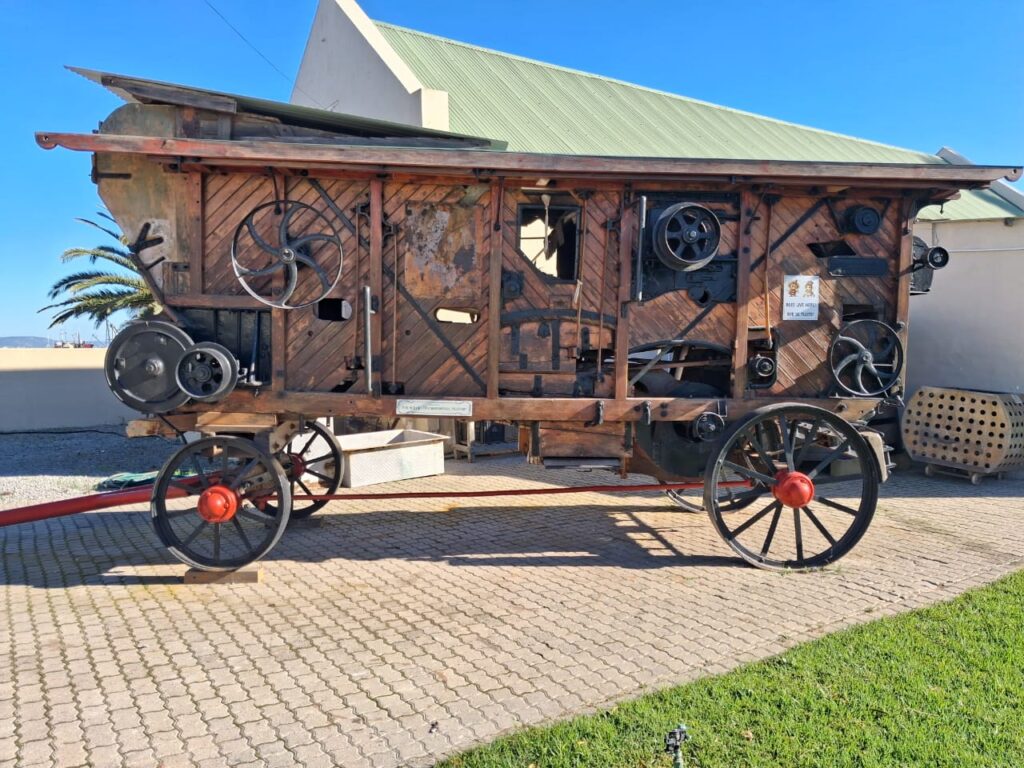
THE MELCK FAMILY’S THRESHING-MACHINE The Brothers Ryk en Desmond Melck bought this machine for threshing on their farms Doornfontein and Kruispad east of Velddrif. This machine worked at Doornfontein farm until the mid-1950s. AFTER DOORNFONTEIN The machine was eventually moved to the “ou Kerkie” [old little church], the previous building of the NG Church in Velddrif and stayed there while Joan Schrauwen had a gallery in the building. When the property was sold, the machine was offered to the Museum. The former Marine Products fish factory towed the machine from Velddrif to its present site at the SA Fisheries Museum in September 2013. MANUFACTURER This machine was manufactured in England by Ransomes (established by Robert Ransome in 1789) which is probably the present Ransomes Jacobsen company known for specialised lawn-mowers. Smuts & Koch from Malmesbury sold the machine to the brothers. The machine was, at the time, described as a “straw chopper” which separates wheat from the chaff. MECHANICS OF THE MACHINE The machine did not have its own power source and was driven by a steam engine, later to be replaced by a tractor. A belt was connected from the power source to the main shaft which, in turn, drove two drive shafts with a multitude of belts which propelled all the different parts. The wheat ended up in grain bags at the back after the chaff was winnowed away.
Seven Survivors, One Sole Tale: The Curse of the Gouden Buys
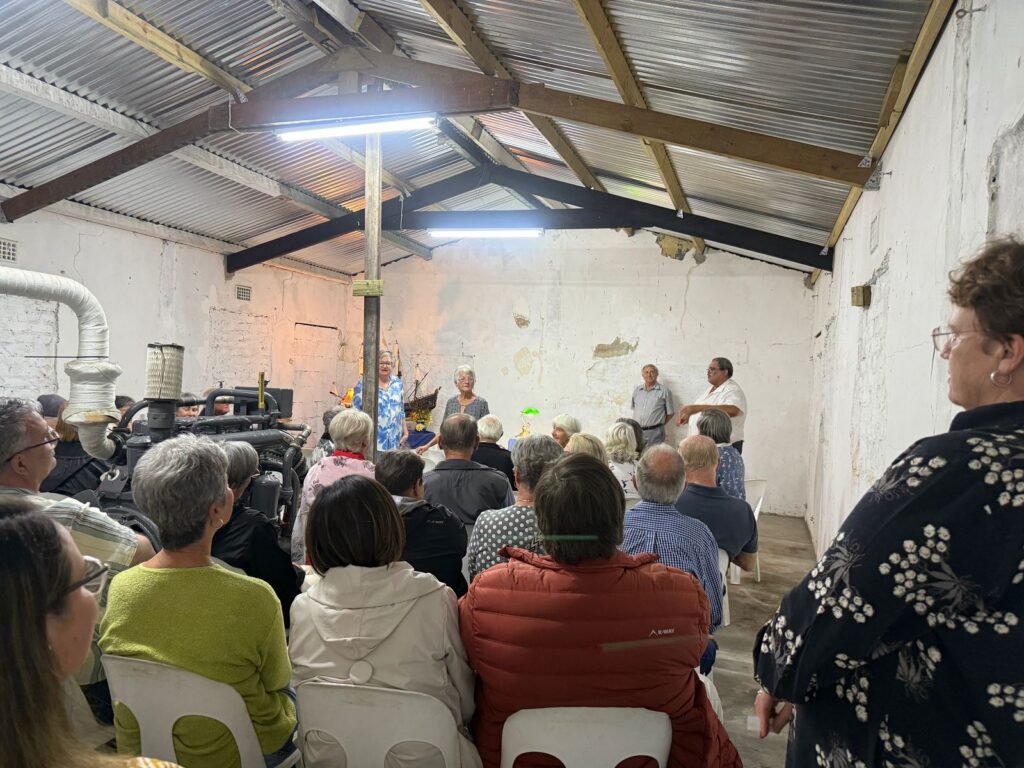
During 17th century, when the VOC, a Dutch Company, traded with the East, many ships set sail from Holland around the Cape of Good Hope on their way to the East. Many of these trading vessels never reached their destination or failed to return to Holland safely. The story of the Gouden Buys became one of these sad tales. The Gouden Buys built in 1690’s at Endhausen, in the Netherlands was a large trading vessel sent to Batavia to cement a stake in the Dutch Cheese Trade. During April 1693 it departed from Endhausen with a complement of 190 persons on board. En route it was delayed for months, becalmed on the Atlantic Ocean. Many of the crew fell seriously ill and died in this time. On arrival in St Helena Bay on the West Coast of Africa with only seven men left who were fit enough to reach the shore to search for help. Of the seven men, five perished trying to find a safe crossing to the present day, Berg River. The remaining two crewmen eventual met up with local Khoi folk, who had contact with the VOC outpost in Saldanha Bay. One of the two survivors, Daniel Zimmermann, returned to the beach and was rescued by the Dageraad, a VOC sailing ship and taken to VOC trading post in Cape Town. According to the records of Daniel Zimmermann, he was the sole survivor of the tragic maiden voyage of the Gouden Buys. When he returned to Holland, he related his full story to a publisher, who, published a booklet of the misfortunes of the crew and their sailing ship in 1695. Later Marieke van Griessel and Andrea Kieskamp two publishers from the town Endhausen, published a best seller of this remarkable incident with the title De Ongelukkige en Treurige Verhaal van de skip De Gouden Buys. Prof. Wium van Zyl, emeritus professor in Afrikaans and Dutch translated this amazing saga from high Dutch into Afrikaans. The Afrikaans translation of the tragedy was released in May 2025 by Prof. Van Zyl at a function hosted by local ATKV branch of Velddrif and the SA Fisheries Museum. Prof. Van Zyl has subsequently received an award for the best Afrikaans translation of a work in a foreign language 2026 from the University of Johannesburg in September 2026. This true story is very much part of the local history of the Berg River and the coastal environment of St Helena Bay. Books are for sale at SA FISHERIES MUSEUM.